
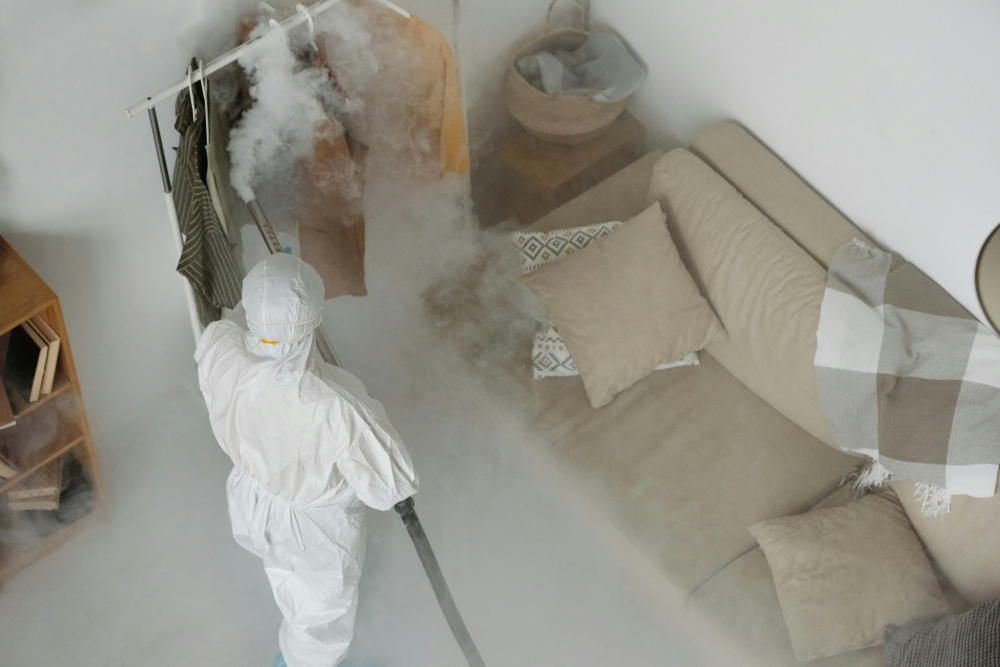
A confirmed bed bug incident in a commercial facility does not stay contained to the room where it was found. It triggers a chain of obligations: guest notification, room closures, documentation requirements, and potential scrutiny from NEA if the facility operates in a regulated sector. Facilities that respond without a structured programme in place typically find themselves managing both the paperwork and the infestation simultaneously, under pressure, with neither resolved. For facilities managers, the priority is a response that is both thorough and legally defensible.
Understanding Bed Bug Infestations in Commercial Facilities
Bed bugs are flat-bodied insects capable of surviving for months without a host, with the following key physical characteristics:
- Body length of approximately 4 to 5 mm when unfed
- Reddish-brown colouring in adults; nymphs are translucent and considerably harder to detect without trained eyes
- Visible size increase after feeding
Unlike many pest problems, bed bugs are not linked to poor hygiene or facility upkeep. They are drawn to warmth, carbon dioxide, and proximity to a host, meaning any high-occupancy facility carries the same introduction risk regardless of how well it is maintained.
What makes them particularly problematic in commercial settings is how quickly that risk compounds: a single pregnant female produces 200-500 eggs over her lifetime. Under favourable conditions, a localised problem in one room can spread floor-wide within weeks.
Why DIY Bed Bug Treatment Fails in Commercial Settings
The impulse to resolve an infestation internally to avoid room downtime is a common strategic error. In a commercial context, non-professional interventions carry compounding costs:
- Insecticide resistance: Bed bugs have developed documented resistance to common insecticide classes, including pyrethroids and neonicotinoids, the active ingredients in most over-the-counter products. Their exoskeletons have adapted to resist chemical penetration at concentrations that are not available without professional-grade equipment.
- Incomplete coverage: Treating the surface of a mattress reaches the visible population but leaves populations harboured in wall voids, electrical outlets, carpet edges, and furniture joints entirely undisturbed.
- Reinfestation risk: Incomplete treatment leads to reinfestation within weeks. In a commercial facility, that means repeated room closures, operational disruptions, and a treatment record that shows the problem was addressed but never resolved. That record creates liability exposure when an incident is reviewed, whether by a guest pursuing a claim or by a regulatory body examining the facility’s response.
For bed bug control in Singapore’s regulated commercial sector, the gap between a documented professional response and an incomplete DIY attempt carries compliance consequences beyond the operational ones.
Understanding Bed Bug Risks, Response, and What Actually Works

How bed bugs behave and how effectively you get rid of them determine whether an incident is resolved or repeated. The following covers what most facilities managers need to know when dealing with a confirmed or suspected problem.
1. How Do You Get Rid of Bed Bugs Quickly?
Heat treatment is one effective, rapid‑response option for bed bugs. When properly applied, sustained temperatures at or around 50°C (for sufficient time) kill both bed bugs and their eggs. Professional heat treatment raises the ambient temperature of an infested space to that threshold. It holds it long enough to reach populations inside furniture, behind wall panels, and within mattress interiors.
Killing bed bugs through heat delivers results within hours rather than the multiple-visit cycle that chemical-only programmes require. In healthcare and food-adjacent environments where minimising chemical exposure is required, heat treatment is particularly appropriate.
2. Can You Get Bed Bugs from a Person?
Unlike lice, bed bugs do not live on human bodies or transfer directly between people. They transition between environments via luggage, clothing, and personal items, posing a persistent risk to any facility with high guest or staff turnover.
In hospitality, guest luggage is the primary point of introduction. In healthcare and warehousing, deliveries and second-hand equipment are equally common vectors. Bed bugs entering Singapore have been linked directly to increased international travel, and any commercial facility receiving guests or goods from high-risk corridors should treat intake inspections as a standard operating procedure.
3. What to Do If You’ve Slept in a Bed with Bed Bugs?
Immediate action is required if you’ve slept in a place with bed bugs. Garments and bedding need to be laundered at temperatures between 50 and 60°C, and all personal belongings must be checked before being taken into a different environment. For facility managers, any reported guest exposure also creates a duty to document the room number, the date, the complaint details, the inspection results, and the response to treatment.
That record is what demonstrates due diligence if the incident is reviewed later. Professional pest control services should be engaged to assess severity before any treatment decision is made, not after a DIY attempt has already disturbed the infestation.
4. What Is the Most Effective Treatment for Bed Bugs?
The bedbug treatment that produces the most reliable outcomes combines heat and targeted chemical application. Heat addresses the accessible, visible population and their eggs. Residual chemical treatment, applied by a licensed technician with knowledge of harbourage behaviour, reaches populations that heat alone may not fully penetrate in complex room configurations.
A professional assessment of the scope of infestation comes first; the treatment combination follows from those findings. The right approach to treating bed bugs is tailored to the specific facility layout and the severity of the infestation, not a fixed protocol applied uniformly.
Professional Bed Bug Treatment for Commercial Facilities
PestBusters’ bed bug treatment is built around commercial realities: scheduling treatment around room availability, maintaining compliance records, and addressing infestations thoroughly rather than partially. Every engagement starts with an assessment before any intervention is carried out.
- A NEA-licensed technician maps the extent of the bed bug infestation, identifies harbourage points, and traces likely introduction routes.
- Heat treatment is applied for rapid control of the primary infestation, supported by residual chemical application for resistant or concealed populations
- Follow-up inspections confirm treatment outcomes and verify that the bed bug infestation has been fully addressed.
- Documentation is produced at every stage: what was inspected, what was found, what was treated, and what the follow-up schedule covers.
- Scheduling is coordinated around room availability to reduce operational disruption, with treatment sequencing designed to contain spread while keeping the wider operation running
That paper trail supports a compliant response to NEA scrutiny or an internal audit, and it is what a reactive, after-the-fact intervention rarely produces.
Prevention and Long-Term Management
A single treatment cycle addresses the existing infestation. Preventing the next one requires a structured programme that does not depend on visible evidence before action is taken.
- Intake inspection protocols: Staff responsible for receiving deliveries, managing guest arrivals, or handling incoming goods should know how to spot bed bugs and understand the escalation procedure when they find signs of activity. That knowledge needs to be trained and documented, not assumed.
- Scheduled inspections: Regular assessments by a pest management provider catch early-stage activity before bed bugs spread. A bed bug infestation identified in one room is a contained incident with a defined treatment scope. The same infestation, found six weeks later across multiple rooms, carries a higher treatment cost, a more complex compliance record, and greater reputational exposure.
- Inspection and treatment records: Detailed documentation of all inspections, findings, and treatments demonstrates to auditors and regulators that pest management is actively maintained, not simply reacted to when a complaint arrives.
Get Ahead of Your Next Inspection
A bed bug incident handled professionally and documented correctly is a manageable operational event. One that is partially addressed or recurs because the root cause was never identified becomes a different kind of problem.
Contact PestBusters to find out how our bed bug treatment in Singapore is designed for commercial facilities and what a compliant, documented programme looks like for your operation.